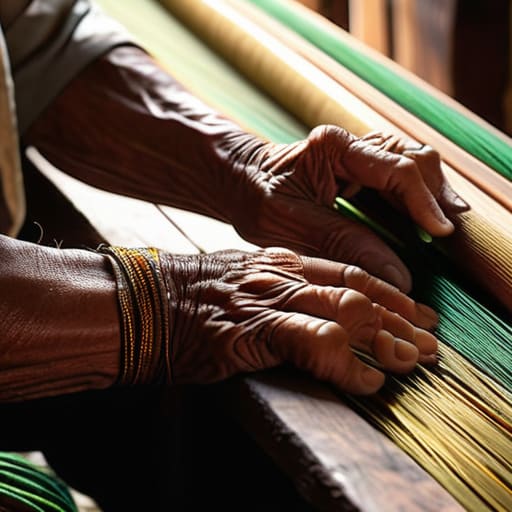
The air in the small village workshop was thick with the scent of damp earth and boiled mulberry leaves, a sharp contrast to the sterile, air-conditioned boutiques in Bangkok. I sat on a low stool, my knees aching slightly, watching an elderly woman’s hands move with a rhythmic, almost hypnotic precision. There was no polished showroom here, just the steady, wooden clack-clack of the loom and the raw, beautiful imperfection of the threads. It was in this humid, quiet corner of Thailand that I realized most people completely misunderstand the soul of thai silk weaving; they see it as a luxury commodity to be bought in a gift shop, rather than a living, breathing connection to the land.
I’m not here to sell you on the high-end glamour or the overpriced tourist souvenirs that lack any real character. Instead, I want to take you behind the scenes of the actual process—from the way the cocoons are harvested to the subtle nuances of the natural dyes. My goal is to help you recognize the difference between mass-produced imitations and the genuine, storied textiles that carry the heartbeat of a community.
Table of Contents
The Quiet Rhythm of Traditional Silk Loom Techniques
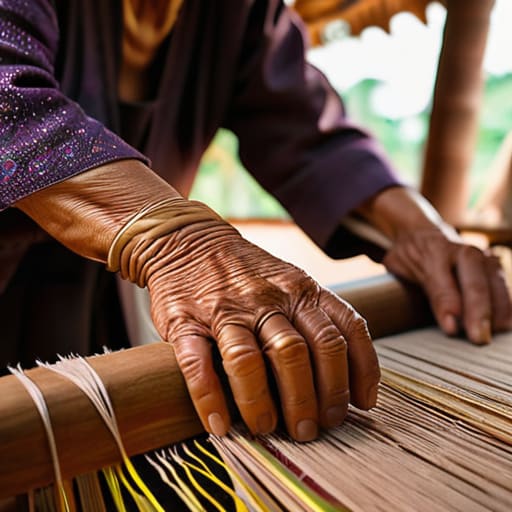
The rhythm of the village isn’t set by a clock, but by the rhythmic clack-clack-clack of wooden shuttles flying back and forth. Sitting on the floor of a small, open-air workshop, I watched a weaver navigate the complexities of traditional silk loom techniques with an ease that felt almost hypnotic. There is no mechanical precision here, only the intentional, slightly imperfect movements of a person who knows exactly how much tension a single thread can hold. It’s a slow dance between the maker and the machine, where every pass of the shuttle adds a layer of soul to the fabric.
As the afternoon sun shifted, casting long shadows across the floor, I noticed how the light caught the subtle irregularities in the thread. This is where you truly recognize authentic thai silk quality—in those tiny, human variations that a factory could never replicate. Unlike the mass-produced rolls in the city markets, these pieces carry the weight of the hours spent hunched over the loom. It’s not just about making cloth; it’s about the patient, steady pulse of a craft that refuses to be rushed by the modern world.
Scent of the Forest Natural Silk Dyeing Processes
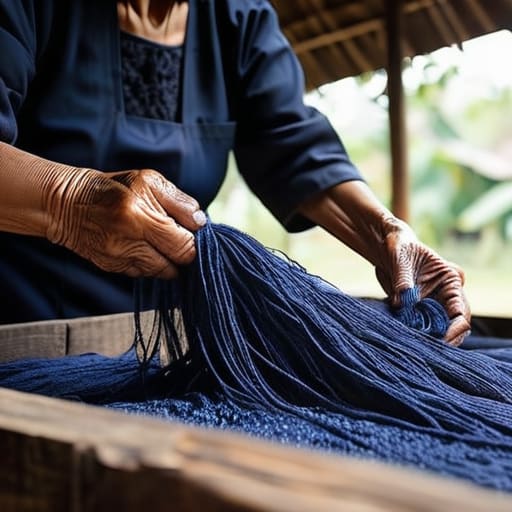
The air in the dyeing shed was thick, heavy with a damp, earthy sweetness that immediately made me reach for my notebook. It wasn’t the sterile, chemical smell of a factory, but something alive. I watched as a woman submerged bundles of raw thread into a steaming vat of indigo, the liquid looking almost black until it hit the oxygen and bloomed into a deep, celestial blue. These natural silk dyeing processes are less about following a recipe and more about listening to the ingredients—the bark of a tree, the crushed shells of insects, or the bruised petals of wildflowers.
There is a certain patience required here that feels almost meditative. You can’t rush the sun or the fermentation of a dye bath; you simply have to wait for the colors to settle. As the silk dried on lines stretched between bamboo poles, the shifting light revealed the subtle, imperfect gradients that define authentic thai silk quality. It’s in these slight variations, these tiny departures from perfection, where the true soul of the craft resides.
Beyond the Surface: How to Truly Appreciate the Silk You Find
- Look for the “imperfections.” When you’re running your fingers over a piece of hand-loomed silk, don’t look for machine-like precision. Instead, look for the slight, beautiful variations in the weave—those are the fingerprints of the weaver, the proof that a human hand, not a motor, guided the thread.
- Follow the scent of the dye. If you have the chance to visit a workshop, breathe in. Real, traditional silk should carry the earthy, botanical scent of the forest—indigo, turmeric, or bark—rather than the sharp, sterile sting of synthetic chemicals.
- Ask about the “story of the thread.” Instead of asking for a price, ask the artisan how long it took to spin the silk or where the dye ingredients were gathered. You’ll find that the most meaningful pieces aren’t just textiles; they are seasonal records of a specific time and place.
- Seek out the village, not the showroom. The most incredible silk isn’t found in the polished boutiques of Bangkok, but in the dusty, sun-drenched courtyards of rural provinces. It’s in these quiet spaces where the rhythm of the loom actually dictates the pace of life.
- Check the weight and the drape. Authentic, hand-woven silk has a soul to it; it possesses a certain weight and a way of catching the light that mass-produced fabric simply can’t mimic. It should feel like a living thing, responsive to the movement of your body.
What the Silk Leaves Behind
The true value of a piece of silk isn’t in its sheen, but in the rhythmic, human imperfections that tell the story of the hands that made it.
To understand the fabric, you have to understand the landscape; the colors aren’t just pigments, they are the literal essence of the local forests and roots.
Preserving these traditions isn’t about keeping them frozen in time, but about honoring the slow, intentional pace of life that modern industry has forgotten.
The Pulse of the Loom
“There is a specific kind of silence that exists in a weaver’s workshop—not a lack of sound, but a rhythmic, breathing stillness where every tug of the thread feels like a conversation between the hands and the heritage they carry.”
Anouk Verhoeven
More Than Just Fabric
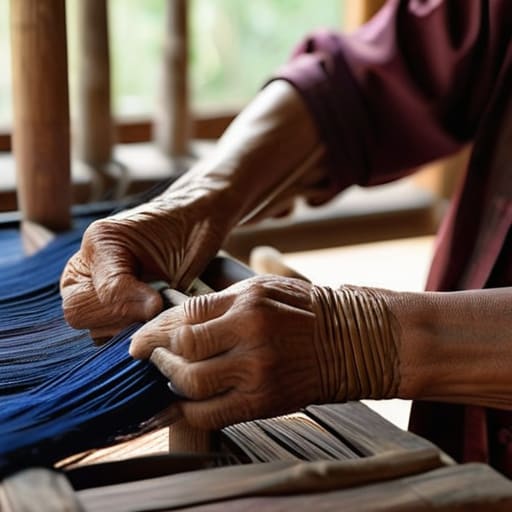
As I packed my notebook away, the scent of crushed indigo and damp earth still clinging to my clothes, I realized that silk weaving is so much more than a craft; it is a sensory map of the region. From the rhythmic, hypnotic thud of the wooden looms to the way the natural dyes transform the silk into something that feels alive, every step is a testament to patience. We’ve seen how the intricate techniques and the deep connection to the forest floor create a textile that carries the very essence of the landscape. It isn’t just about the finished garment, but the quiet, intentional labor that goes into every single thread.
Leaving the village, I felt a profound sense of gratitude for these small, preserved pockets of history. In a world that feels increasingly fast and disposable, there is something deeply grounding about a tradition that refuses to be rushed. When you hold a piece of hand-woven Thai silk, you aren’t just holding fabric; you are holding a story, a lineage, and a way of life. I hope that the next time you find yourself traveling, you look past the polished souvenir shops and seek out these authentic, breathing connections. After all, the truest soul of a place is often found in the things made by hand.
Frequently Asked Questions
How can I tell the difference between authentic hand-woven silk and the mass-produced imitations often found in the bigger markets?
I always look for the “beautiful imperfections.” Mass-produced silk is almost too perfect, unnervingly smooth and uniform. Real, hand-woven silk has a subtle, irregular texture—a slight bump or a tiny variation in the weave that tells you a human hand was guiding the shuttle. I also love to run my fingers over it; authentic silk feels alive, with a soft, organic weight, whereas the imitations often feel strangely cold or overly slick.
Is it possible to find these smaller weaving villages without a guide, or are they tucked too far away from the main travel routes?
It’s definitely possible, but you’ll need to trade your GPS for a bit of intuition. Most of these villages aren’t “hidden” so much as they are just… quiet. If you skip the tour buses and take a local songthaew further into the provinces, you’ll find them. Just look for the narrow roads where the air smells faintly of mulberry leaves. Don’t be afraid to get a little lost; that’s usually where the real magic happens.
What should I look for in a piece of silk to know if the natural dyes used are truly sustainable and safe for my skin?
I’ve learned the hard way that “natural” is often used as a marketing buzzword. When I’m inspecting a scarf, I look for those beautiful, slightly imperfect color variations—nature isn’t uniform. If the color looks suspiciously neon or flat, it’s likely synthetic. I also gently rub a white cloth against the fabric; if any pigment transfers, the dye hasn’t been properly set. Most importantly, I always ask about the mordant. If they can’t explain how they fix the color, I walk away.
