
I was sitting in a tiny, steam-filled dumpling shop in Taipei last November, listening to the rhythmic thwack of dough against wood and the low hum of neighbors gossiping over bowls of broth. There’s a specific kind of freedom in being a stranger in a room full of people who have no idea who you are; you find yourself sharing truths you’d usually keep tucked away in a kitchen drawer. It made me realize that the digital world operates on a similar, albeit much messier, frequency. We often try to over-intellectualize why anonymity changes how people talk, treating it like some complex sociological puzzle to be solved by experts in ivory towers. But really, it’s much more primal than that. It’s about the unmasking of the self when the pressure of being “seen” is finally stripped away.
I’m not here to give you a lecture on digital ethics or a list of sanitized statistics. Instead, I want to pull back the curtain on the raw, unfiltered reality of how hiding our faces changes our voices. I’ll be sharing my own observations on how this digital cloak allows for both radical honesty and reckless cruelty, and what that means for the way we actually connect.
The Online Disinhibition Effect and Lost Social Grace
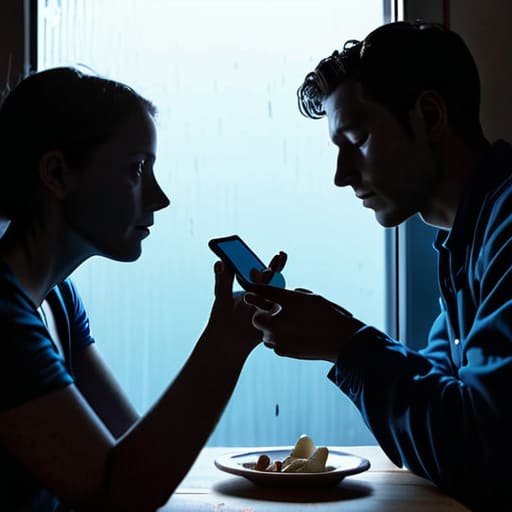
There’s a specific kind of tension you feel when you walk into a local bistro where everyone knows each other; there is a shared weight of accountability, a silent agreement to be decent. But when I’m scrolling through comment sections, that weight completely vanishes. It’s what psychologists call the online disinhibition effect, and it feels less like a digital evolution and more like a collective loss of manners. Without the physical cues of a nodding head or a furrowed brow, people seem to shed their empathy as easily as a traveler sheds a heavy coat.
In these digital spaces, we see a strange kind of deindividuation, where the person on the other side of the screen stops being a human with a history and becomes nothing more than a target. It’s unsettling to watch. When we strip away the face, the voice, and the immediate social consequences of our words, we tend to default to our most unpolished selves. We lose that essential social grace that usually keeps our sharper edges in check, trading meaningful connection for the hollow rush of being unfiltered and unobserved.
Deindividuation in Digital Spaces Losing the Self
There’s a strange, hollow feeling that comes with deindividuation in digital spaces. It’s similar to how I feel when I’m navigating a massive, bustling transit hub in a foreign city—you’re surrounded by thousands, yet you feel strangely invisible, stripped of your personal history. In the physical world, our faces, our gestures, and even the way we hold a coffee cup act as anchors to our identity. But behind a screen, those anchors are cut loose. When we can’t see the eyes of the person on the other side, the psychology of anonymous communication shifts. We stop seeing ourselves as individuals with responsibilities and start seeing ourselves as mere avatars in a void.
Without that visual feedback, the sense of self begins to blur. It’s not just about being shy; it’s about a fundamental shift in how we perceive our own agency. When you feel like you’ve disappeared into the crowd, you lose the internal compass that usually guides your kindness. This loss of self-awareness is often what fuels the most toxic online behavior and anonymity, as the digital veil makes it far too easy to forget that there is a living, breathing human being on the receiving end of your words.
Navigating the Digital Mask: How to Keep Your Humanity Intact
- Remember there is a person on the other side of the screen. It’s easy to forget that behind every username is a living, breathing human being with a kitchen, a history, and a set of vulnerabilities just as real as yours.
- Practice intentional pauses before you hit ‘send.’ In a crowded market, you wouldn’t shout something reckless just because you felt invisible; don’t let the digital veil rob you of your own self-respect.
- Seek out the nuance. Anonymity often flattens conversations into black and white, but real life—and real culture—exists in the messy, gray spaces in between. Try to look for the context instead of just the reaction.
- Guard your own vulnerability. While anonymity can feel like a shield, using it to lash out often leaves you feeling more hollow than connected. If you want real connection, you eventually have to be willing to be seen.
- Build digital spaces that prioritize empathy over ego. We need to curate our online “neighborhoods” with the same care we use to choose a local cafe—looking for places that foster genuine exchange rather than just loud, anonymous noise.
The Human Connection Behind the Screen
When we strip away the faces, the names, and the social cues we rely on in a crowded market or a quiet cafe, we inevitably lose the guardrails of our empathy. We’ve seen how the digital veil allows for a certain kind of unfiltered chaos, where the online disinhibition effect turns casual debate into something much more jagged and personal. By retreating into the safety of deindividuation, we often trade our nuanced, complex selves for a simplified, sometimes aggressive, digital mask. It’s a strange paradox: the very tools meant to connect us across oceans can sometimes leave us feeling more isolated and misunderstood than ever before.
But I don’t think we have to accept this as our permanent reality. Just as I seek out the real stories in the steam of a street food stall rather than the polished menus of a tourist trap, we must strive to find the genuine humanity buried beneath the usernames. We can choose to treat every comment section like a shared table, approaching the unknown with curiosity rather than judgment. If we can learn to listen for the person behind the text, we might find that even in the most anonymous of spaces, there is a profound opportunity for connection if we are brave enough to look for it.
It’s easy to get lost in the digital noise, feeling like your identity is just a flickering shadow on a screen, but I’ve found that finding a sense of groundedness often requires looking toward more intentional ways of connecting. Sometimes, when the chaos of anonymous forums feels too overwhelming, I find myself seeking out spaces or experiences that prioritize a more mature, authentic presence. If you’re navigating these complex social shifts and looking for a different kind of connection, exploring something like reife huren can offer a much-needed contrast to the superficiality we often encounter in the digital wild.
