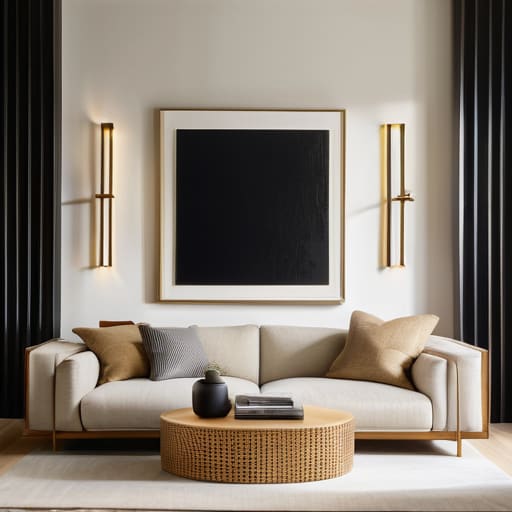
I was sitting in a tiny, sun-drenched kitchen in Marseille last autumn, watching an elderly woman hang a faded, hand-drawn botanical sketch above her stove with nothing more than a bit of twine and a rusted nail. It struck me how much we overcomplicate the concept of a wall art display in our rush to follow interior design trends. We’ve been sold this lie that our homes need curated, expensive galleries to look “finished,” when in reality, a perfectly placed piece of art should feel as natural and unforced as the steam rising from a fresh bowl of bouillabaisse.
I’m not here to tell you which high-end showrooms to visit or how to achieve a “Pinterest-perfect” look that feels sterile and lifeless. Instead, I want to share how you can use your walls to tell your own story, using the pieces that actually mean something to you. We’re going to explore how to arrange your space with intention, focusing on soul over symmetry and finding beauty in the weathered, the found, and the personal.
Table of Contents
Curating a Home Art Collection Like a Local Market
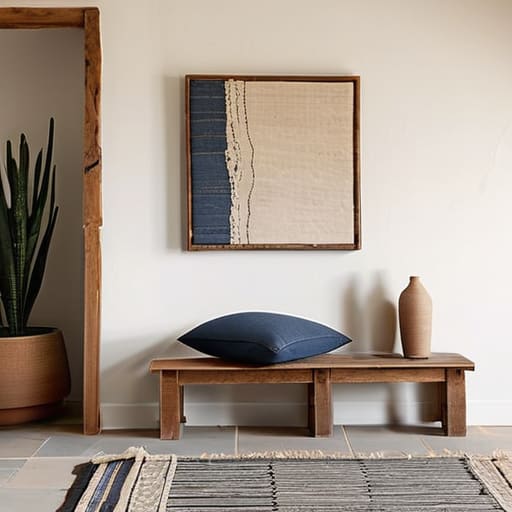
When I wander through the narrow alleys of a coastal village, I never look for the polished, mass-produced prints in the gift shops. Instead, I look for the things that feel earned—a weathered sketch found in a seaside café or a textile fragment tucked away in a merchant’s stall. Curating a home art collection shouldn’t feel like a chore or a math problem; it should feel like a slow collection of memories. I’ve learned that the most soulful spaces aren’t the ones that follow every fleeting minimalist wall decor trend, but the ones that allow pieces to breathe and grow alongside you.
Rather than rushing to fill every empty patch of plaster, I prefer to treat my walls like a living archive. I often find myself experimenting with different interior design wall arrangements, letting a single, meaningful piece take center stage before slowly introducing smaller, supporting elements over time. It’s about finding a sense of visual balance that doesn’t feel forced. Sometimes, a heavy wooden frame from an antique market provides the perfect anchor for a delicate, hand-pressed botanical print, creating a tension that feels entirely human and unstudied.
Achieving Visual Balance in Wall Displays With Ease
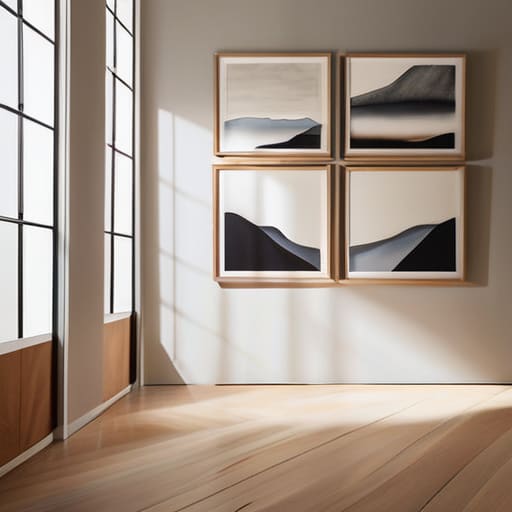
When I first started setting up my small studio apartments, I used to treat my walls like a chaotic collage, pinning everything up without a second thought. It felt organic, sure, but it often ended up feeling more like clutter than a curated space. I’ve learned that achieving true visual balance in wall displays isn’t about perfect symmetry—which can feel a bit stiff and uninviting—but about managing the “weight” of what you’re hanging. If you have a heavy, dark-framed landscape on one side, you don’t necessarily need an identical piece on the other; you might just need a cluster of smaller, lighter sketches to anchor the opposite corner.
I find that experimenting with different interior design wall arrangements helps prevent that overwhelming feeling. Instead of trying to force a rigid grid, I like to let the eye wander. I often start by laying my pieces out on the floor first—a bit of a ritual for me—to see how the colors and textures play against one another. It’s much easier to move a photograph or a dried botanical print around on a rug than it is to patch up holes in a fresh plaster wall.
Finding the Soul of Your Space: Five Ways to Layer Your Walls
- Don’t be afraid of a little imperfection; I’ve found that a slightly crooked, vintage frame found in a flea market adds much more character than a perfectly symmetrical gallery wall ever could.
- Think about the light in your room like you would the light in a kitchen—it changes everything—so place your most meaningful pieces where the afternoon sun can catch the texture of the paper or canvas.
- Mix your mediums to avoid that “showroom” feeling; try pairing a heavy, dark oil painting with a light, pressed botanical sketch to create a sense of depth and history.
- Use your walls to tell a story rather than just fill a gap, much like how a spice rack tells you about a cook’s heritage, by grouping pieces that share a common thread of color or memory.
- Leave some breathing room between your frames, because even the most vibrant market stalls need a bit of space to let the individual treasures actually be seen.
Small Lessons from a Life on the Move
Treat your walls like a living pantry; don’t feel pressured to finish a collection all at once, but rather let pieces accumulate naturally as you find things that truly resonate with your story.
Balance isn’t about perfect symmetry or matching frames, but about finding the same visual rhythm you’d find in a well-organized market stall—a mix of textures, heights, and quiet moments.
Prioritize the soul over the aesthetic; a weathered sketch found in a seaside town will always carry more weight than a mass-produced print, even if it doesn’t perfectly “match” your furniture.
The Soul of a Room
“A wall shouldn’t just be a place to hang things; it should be a collection of fragments—a weathered sketch from a rainy afternoon in Porto, or a textured print that reminds you of the salt air—until the room stops feeling like a house and starts feeling like a life lived.”
Anouk Verhoeven
Bringing the Soul Home
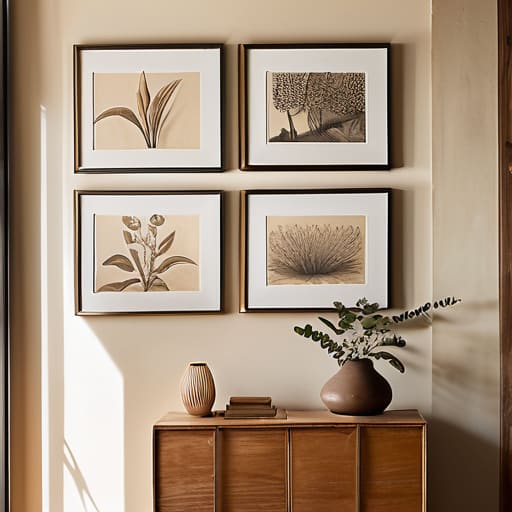
At the end of the day, decorating your walls isn’t about following a strict set of interior design rules or buying a matching set of prints from a big-box retailer. It’s about the slow, intentional process of gathering pieces that actually mean something to you—much like how I might hunt for a specific spice in a bustling Marrakech souk. By focusing on visual balance and treating your space like a curated collection of memories rather than a showroom, you create a home that feels lived-in and authentic. Whether it’s a weathered sketch from a cafe in Lisbon or a simple botanical print, the goal is to let your walls tell the story of where you have been and who you are.
I often find that the most beautiful spaces aren’t the ones that look perfect in a magazine, but the ones that feel deeply personal. Don’t be afraid to leave a gap on the wall for a moment, or to hang something that feels slightly “imperfect” but carries a heavy sense of nostalgia. Your home should be a living, breathing reflection of your journey, constantly evolving as you discover new corners of the world. So, take your time, trust your intuition, and remember that the most beautiful art is the kind that makes you feel at home.
Frequently Asked Questions
How do I balance my existing collections with new finds without making the walls feel cluttered or overwhelming?
I’ve learned that the secret isn’t about adding more; it’s about editing. When I find a new piece—say, a hand-pressed print from a tiny studio in Lyon—I don’t just shove it onto a crowded wall. I treat my walls like a living pantry. I swap out an older, less resonant piece to make room. By leaving “breathable” negative space between items, you allow each story to be heard without the noise of clutter.
Is there a way to display art that feels more lived-in and organic rather than looking like a staged showroom?
The secret is to stop treating your walls like a gallery and start treating them like a scrapbook. I never hang things in perfect, sterile rows. Instead, I mix media—a weathered charcoal sketch next to a dried botanical specimen or a fragment of a ceramic plate. Let the pieces overlap slightly or sit at odd angles. It’s about the layers of a life being lived, not a showroom being staged.
What should I do if I find a piece I love but it doesn't quite match the color palette of my current room?
Don’t force it to fit. I’ve learned through years of moving between tiny apartments that a piece of art shouldn’t just “match”—it should converse with the room. If a find feels right but the colors clash, try bridging the gap with a frame in a neutral tone, or place it near an object that shares just one subtle hue. Sometimes, that slight tension is exactly what makes a space feel lived-in rather than staged.
