
I was sitting in a tiny, steam-filled dumpling shop in Taipei last November, watching a man at the corner table. He was alone, tucked away in a shadow where no one knew his name or his business, and he was typing furiously on his phone, his face lit by a glow that seemed to strip away every ounce of his usual reserve. It hit me then that we often treat the internet like a sterile laboratory, but it’s much more like that dim corner table; it’s a space where the social guardrails we spend our whole lives building simply evaporate. We talk a lot about the toxicity of the web, but we rarely stop to dissect the actual mechanics of why anonymity changes how people talk and how that shift fundamentally alters our human connection.
I’m not here to give you a lecture on digital sociology or some sanitized, academic breakdown of online behavior. Instead, I want to look at this through a more human lens, exploring how the absence of a face changes the weight of our words. I’ll be sharing what I’ve observed from the fringes of different cultures and digital spaces—the raw, unpolished truth about how we reveal ourselves when we think no one is watching.
The Online Disinhibition Effect Shedding Our Social Masks
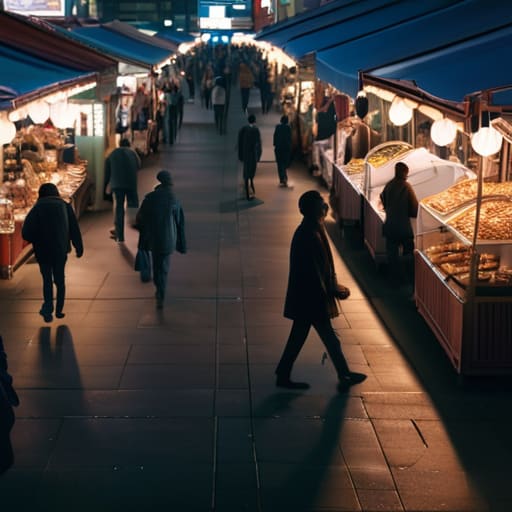
It reminds me of that strange, fleeting feeling you get when you walk through a massive, bustling market in a city where nobody knows your name. There’s a certain freedom in being a ghost among the stalls, but that freedom can quickly turn into something sharper. In the digital world, psychologists call this the online disinhibition effect. It’s that sudden loosening of the internal leash we all carry. When we aren’t met with the immediate, physical cues of a person’s expression or the weight of their gaze, the social friction that usually keeps us polite simply evaporates.
Without the accountability of a face, we experience a kind of deindividuation in online spaces. It’s as if the digital veil allows us to shed our carefully constructed identities, leaving behind only our most raw—and sometimes most volatile—impulses. While this can lead to beautiful, unfiltered honesty, it’s a double-edged sword. We see it play out in the way a comment section can shift from a thoughtful discussion to a battlefield in seconds; once the mask is off, the social consequences of internet anonymity become painfully clear.
Deindividuation in Online Spaces Losing the Self in the Crowd
There’s a strange, almost hypnotic thing that happens when you step into a massive, bustling crowd—the sense of your own individuality just… thins out. It’s the same feeling I get when I’m lost in a sea of people at a midnight market in Taipei; you become part of a collective pulse rather than a single person. This is essentially what we see with deindividuation in online spaces. When we aren’t looking someone in the eye, or when we feel tucked away behind a screen, that internal compass that tells us to be kind and measured starts to spin wildly.
Without the weight of our physical presence, the psychology of anonymous communication shifts from personal connection to a sort of collective trance. We stop acting as individuals with histories and responsibilities, and start acting as mere extensions of the digital swarm. It’s a slippery slope; when you feel invisible, the boundaries of your own empathy tend to blur. We aren’t just losing our names; we’re often losing the very things that make us human in the first place.
Finding the Human Beneath the Handle: How to Navigate the Digital Fog
- Look for the intention, not just the impulse. When someone hides behind a screen, they often react to the immediate sting of an idea rather than the person behind it; try to pause and ask if you’re responding to a real human or just a digital shadow.
- Practice “digital empathy” by imagining the physical space the other person might be in. It’s easy to forget that behind a nameless comment, there’s likely someone sitting in a quiet kitchen or a crowded bus, just as real and messy as we are.
- Guard your own vulnerability. Anonymity is a double-edged sword; it can give you the freedom to be honest, but it can also tempt you to say things you’d never whisper in a crowded market. Use that freedom to be authentic, not just loud.
- Don’t mistake volume for truth. In the absence of a face or a name, the loudest voices often feel like the most authoritative, but just because a comment is anonymous doesn’t mean it carries the weight of lived experience.
- Seek out the “small tables” of the internet. Just as I avoid the flashy tourist traps to find real culture, try to find the niche, smaller communities where names and reputations actually matter—it’s where the conversation feels a lot more like a shared meal and a lot less like a shouting match.
The Human Behind the Screen
When we strip away the names, the faces, and the social hierarchies, we aren’t just removing identifiers; we are fundamentally altering the chemistry of how we connect. As we’ve seen, the online disinhibition effect and the pull of deindividuation can act as a double-edged sword. On one hand, anonymity offers a rare kind of freedom to speak truths that might otherwise be stifled by the fear of judgment. On the other, it can easily dissolve the empathy that usually keeps our social interactions grounded. It’s a delicate balance between finding your voice and losing your humanity in the digital noise.
Ultimately, I think the way we navigate these masked spaces says more about us than the screens themselves. Just as I’ve learned that a single spice can change the entire soul of a dish, the way we choose to use our digital anonymity can either season our conversations with honesty or poison them with hostility. We have to remember that even when we are invisible, there is a real person on the other side of the text, waiting to be seen. Let’s try to use our digital masks not to hide from one another, but to uncover the raw, honest truths that make us human.
It’s a strange, almost dizzying sensation, isn’t it? One moment you’re carefully curating your persona, and the next, you’re swept up in the collective energy of a digital space where the usual rules just don’t seem to apply. I’ve found that when the boundaries of our physical selves start to blur, it can be helpful to have a way to navigate these more unfiltered social landscapes without feeling completely adrift. If you ever find yourself wanting to explore these more spontaneous, unmasked forms of connection, checking out an adult chat region can be a way to see just how much the human spirit shifts when the traditional social scripts are tossed aside. It’s less about the destination and more about understanding the shift in how we truly communicate when we think no one is watching.
